When project requirements change, standard industrial panels may leave costly gaps in performance, layout, or installation. This raises an important question: can industrial panels be customized for specific projects? In many cases, yes. Experienced panel builders can adjust enclosure dimensions, control layouts, power ratings, wiring routes, and communication interfaces. They may also accommodate harsh environments, limited floor space, unusual voltage requirements, or specialized automation equipment.
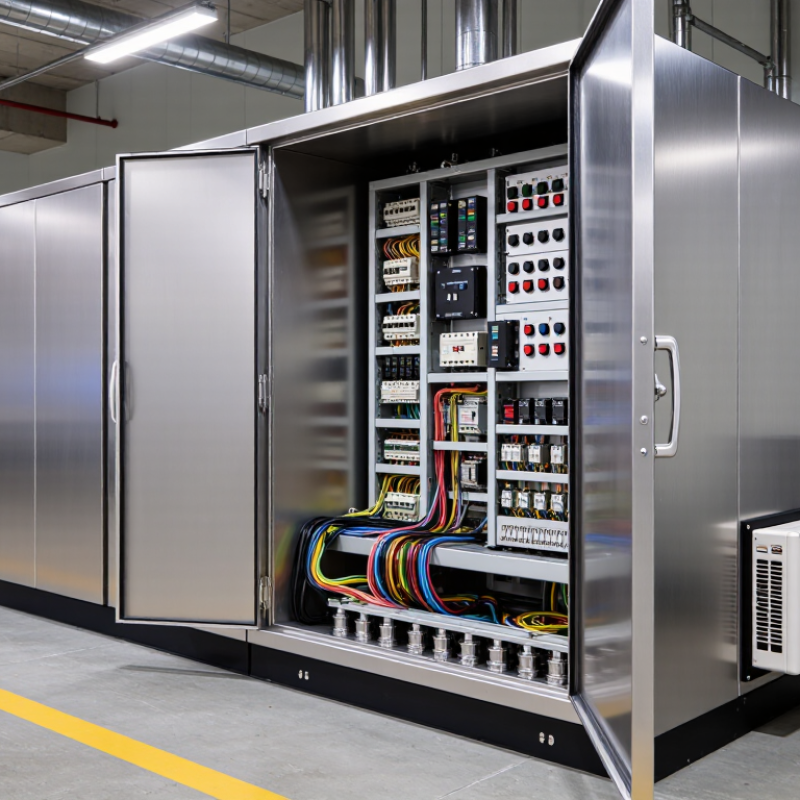
A customized panel often begins with a detailed site review. Engineers examine load schedules, cable entry points, heat generation, maintenance access, and operator visibility. For example, a food-processing facility may need stainless steel construction, sealed cable glands, and easy-clean surfaces. A remote pumping station might require climate control, surge protection, and clear fault indicators. These details influence both safety and long-term reliability.
Good customization depends on verified drawings, accurate component data, and disciplined testing. Factory acceptance testing can reveal loose terminals, incorrect labeling, or software mismatches before shipment. Small errors matter. They can delay commissioning.
However, customization is not automatically better. A unique design may increase lead time, spare-parts complexity, and training requirements. Project teams sometimes focus on appearance while overlooking future maintenance. That is a weakness worth questioning. The strongest solution balances technical performance, recognized standards, serviceability, and realistic budget limits. With qualified engineering support and transparent documentation, a customized industrial panel can fit the project without becoming an unnecessary burden.
Rated Voltage, Current, SCCR, and IP Data Define the Custom Design
Can Industrial Panels Be Customized for Specific Projects?
Rated Voltage, Current, SCCR, and IP Data Define the Custom Design
Industrial panels can be customized, but the process begins with verified electrical data. Rated voltage determines insulation levels, clearances, and component selection. Current ratings shape busbar sizes, feeder layouts, and heat management. In a workshop, even a small change in motor load can affect the entire design. The first drawing is rarely final.
Short-circuit current rating, or SCCR, deserves careful attention. It shows how much fault energy the panel can withstand safely. Engineers review available fault current, protective devices, and internal connections before approval. A higher SCCR may require stronger components and more coordinated protection. Guessing here is risky.
Ingress protection, or IP data, connects the panel to its real environment. Dusty production floors, washdown areas, and outdoor cabinets need different enclosure protection. IP ratings address solid particles and water exposure, not every environmental threat. Temperature, corrosion, condensation, and cable entry points still require review. Small details matter. A poorly sealed gland can undermine an otherwise suitable enclosure. Experienced designers confirm site conditions, load schedules, and applicable standards with the installation team. However, field information is sometimes incomplete, so assumptions should be recorded and challenged before fabrication.
Can Industrial Panels Be Customized for Specific Projects?
Rated voltage, current, SCCR, and IP data define the custom design. The chart compares typical project configurations against a reference envelope of 600 V, 400 A, 65 kA SCCR, and IP66.
Values are normalized to the reference envelope for visual comparison. Hover over each bar to view the actual rated voltage, current, SCCR, and IP rating. The listed values represent commonly specified industrial panel design ratings.
IEC 61439 Requirements Guide Custom Assembly Architecture and Verification
Can industrial panels be customized for specific projects? Yes, but customization must follow IEC 61439 architecture and verification rules. The standard separates design verification from routine verification. Design verification confirms the assembly’s construction and performance. Routine verification checks every completed panel before delivery.
Project engineers usually define rated current, short-circuit withstand, ingress protection, internal separation, cable access, and control requirements. They also select busbar geometry, enclosure dimensions, protective devices, and ventilation methods. IEC 61439-1 and IEC 61439-2 address temperature-rise limits, dielectric properties, clearances, creepage distances, protective-circuit continuity, and short-circuit performance. Small details matter. A poorly positioned cable gland can weaken protection against dust and moisture.
Electricity demand is increasing the pressure on distribution equipment. The International Energy Agency’s Electricity 2024 report expects global electricity demand to grow by about 4% annually through 2026. That growth encourages more site-specific switchboards in factories, infrastructure facilities, and energy projects. However, a customized panel is not automatically a better panel. Practical experience shows that late changes often disturb heat calculations, spare capacity, or door clearances. One overlooked issue can force costly rework. The assembly manufacturer should preserve documented evidence, including verification records, component data, drawings, and inspection results. Testing every panel also matters. A design may look correct on paper, yet wiring errors, loose terminals, or damaged insulation can remain. Engineers should question assumptions, especially when older project templates are reused without fresh verification.
IP65–IP66 and NEMA 4X Ratings Shape Enclosure and Material Selection
Can Industrial Panels Be Customized for Specific Projects?
IP65, IP66, and NEMA 4X ratings strongly influence industrial panel design. IP65 protects against dust and water jets. IP66 provides stronger water protection during severe washdown. NEMA 4X adds corrosion resistance, making it suitable for coastal plants, food-processing rooms, and chemical areas.
Material selection must match the environment, not only the rating label. Stainless steel suits salt air and frequent cleaning, while powder-coated steel can work well indoors. Non-metallic enclosures may reduce corrosion risks, but they require careful checks for impact strength and heat exposure. During enclosure reviews, technicians often find weak points around door gaskets, hinges, cable glands, and unused cutouts. A perfect rating can fail through one careless opening.
Tips:
Confirm the test standard and installation method. Specify cable entries, drain requirements, internal heat, and future equipment space before fabrication. A sealed enclosure may trap heat. That detail is easy to miss. Custom panels can include mounting plates, viewing windows, ventilation systems, and operator cutouts, but each modification must preserve the enclosure’s protection level. In practice, project teams sometimes choose IP66 when IP65 would be adequate, adding cost without real benefit. That choice deserves review. Also, NEMA 4X does not automatically describe every electrical feature inside the panel, so component selection remains essential.
Busbar Capacity, Heat Dissipation, and 35°C Ambient Design Conditions
Can Industrial Panels Be Customized for Specific Projects?
Busbar Capacity, Heat Dissipation, and 35°C Ambient Design Conditions
Yes, industrial panels can be customized, but customization should begin with measured electrical and thermal requirements. Busbar capacity must match continuous load, short-circuit withstand, diversity, and future expansion. A panel rated only for today’s current may become restrictive after one equipment upgrade. Engineers should verify conductor temperature rise, joint quality, enclosure volume, and ventilation paths. At 35°C ambient, heat has less margin to escape than many preliminary designs assume. Small internal losses accumulate around breakers, terminals, and crowded cable entries. A calculation based on nominal current alone is not reliable.
Tips: Request a thermal calculation and busbar derating record before approval. Check the maximum operating temperature, not just the average room temperature. Leave practical space for cable bending and inspection. This detail is often underestimated. Ask for routine test evidence and design verification aligned with applicable standards, such as IEC 61439, where relevant.
A customized design may use larger busbars, separated functional compartments, improved airflow, or forced cooling. The choice depends on fault levels, ingress protection, maintenance access, and installation altitude. Heat dissipation must be validated under realistic loading, including simultaneous operation of major feeders. Infrared inspection during commissioning can reveal warm joints that calculations miss. Yet field conditions change. Dust, blocked vents, and loose connections can undermine a sound design. The final specification should state clear limits, inspection points, and adjustment responsibilities. Good engineering leaves room for review, not just approval.
Can Industrial Panels Be Customized for Specific Projects? — Busbar Capacity, Heat Dissipation, and 35°C Ambient Design Conditions
| Panel Configuration |
Rated Current |
Busbar Arrangement |
Typical Busbar Cross-Section |
Estimated Busbar Heat Loss |
Enclosure Size
(H × W × D) |
Estimated Total Heat Dissipation |
Thermal Design at 35°C Ambient |
Small feeder panel
Low-voltage distribution |
250 A |
3-phase copper busbars
with protective neutral bar |
25 × 5 mm copper
Approx. 125 mm² per phase |
Approx. 45 W |
1,200 × 600 × 300 mm |
Approx. 180 W |
Natural ventilation; maintain clearances around cable terminations and heat-generating devices. |
Standard distribution panel
Commercial or light industrial loads |
630 A |
3-phase copper busbars
separate neutral and protective earth bars |
40 × 10 mm copper
Approx. 400 mm² per phase |
Approx. 115 W |
1,800 × 800 × 400 mm |
Approx. 420 W |
Natural ventilation is generally practical when internal component spacing and heat paths are properly designed. |
Main incoming panel
Industrial power distribution |
1,000 A |
Parallel copper busbars
full-size neutral where required |
2 × 50 × 10 mm copper per phase
Approx. 1,000 mm² per phase |
Approx. 240 W |
2,000 × 1,000 × 600 mm |
Approx. 850 W |
Forced ventilation or a larger enclosure may be required if the internal temperature target cannot be maintained. |
High-capacity motor control panel
Process and manufacturing equipment |
1,600 A |
Parallel copper busbars
segregated functional compartments |
2 × 60 × 10 mm copper per phase
Approx. 1,200 mm² per phase |
Approx. 390 W |
2,200 × 1,200 × 800 mm |
Approx. 1,350 W |
Use thermal calculation or temperature-rise verification; consider bottom air inlets and top exhaust paths. |
High-current switchboard section
Large industrial loads |
2,000 A |
Multiple parallel copper busbars
with segregated cable compartments |
2 × 80 × 10 mm copper per phase
Approx. 1,600 mm² per phase |
Approx. 560 W |
2,200 × 1,600 × 1,000 mm |
Approx. 1,900 W |
Forced-air cooling, temperature monitoring, or a larger panel lineup may be needed for continuous full-load operation. |
Compact control and automation panel
Control equipment with moderate power load |
160 A |
Single copper busbar system
with control-voltage segregation |
20 × 5 mm copper
Approx. 100 mm² per phase |
Approx. 25 W |
1,000 × 600 × 250 mm |
Approx. 120 W |
Natural convection may be adequate; heat-sensitive PLC, drive, and power-supply components should be separated. |
Engineering basis: Values are representative reference figures for low-voltage industrial panel customization at a 35°C ambient temperature. Busbar capacity depends on conductor material, cross-sectional area, spacing, enclosure type, ventilation, installation position, permissible temperature rise, short-circuit withstand requirements, and the applicable edition of IEC 61439. Final ratings should be confirmed by the manufacturer’s design verification, temperature-rise assessment, and project-specific load calculations.
Routine Tests Include Wiring Checks, Insulation Tests, and 2.5 kV Withstand Verification
Can Industrial Panels Be Customized for Specific Projects?
Industrial panels can be tailored to a project’s voltage, control logic, enclosure size, and cable entry points. However, customization should never weaken routine testing. In practical workshop inspections, technicians begin with wiring checks. They compare terminal numbers, conductor colors, ferrules, and tightening points against approved drawings. A single misplaced wire can cause a sensor to fail or a motor to start unexpectedly. Small details matter.
Tips: Keep drawings beside the panel. Use calibrated meters. Record every result. Check labels twice.
Insulation testing helps identify damaged conductors, contamination, or unwanted connections between circuits. The test voltage and acceptance limits must follow the project specification and applicable standards. For suitable assemblies, a 2.5 kV withstand verification may confirm that insulation tolerates the required electrical stress. Qualified personnel should isolate sensitive components before testing. Otherwise, a good test can damage a good device. That mistake is easy to overlook. Test records should include instrument details, applied voltage, duration, and measured results. Photos of terminal rows can also improve traceability. In my experience, rushed documentation creates uncertainty later, even when the panel works correctly. A second review is worth the extra minutes.
FAQS
Yes. Customization can cover voltage, control logic, enclosure size, busbars, and cable entry points.
Busbar capacity should match continuous load, fault withstand, diversity, and expected expansion.
At 35°C, heat has less room to escape from the panel.
Larger busbars, separated compartments, better airflow, or forced cooling may help.
Request a thermal calculation and a busbar derating record.
Technicians should compare terminal numbers, conductor colors, ferrules, and tightening points with approved drawings.
Insulation testing can identify damaged conductors, contamination, and unwanted circuit connections.
Suitable assemblies may undergo a 2.5 kV withstand verification for required electrical stress.
Records should include instrument details, applied voltage, test duration, and measured results.
Conclusion
Can industrial panels be customized for specific projects? Yes, industrial panels can be engineered around the electrical, environmental, and operational requirements of each installation. Key design inputs include rated voltage, operating current, short-circuit withstand capability, and the required ingress protection level. These parameters help define the internal layout, protective devices, enclosure construction, and connection methods. Compliance with IEC 61439 also guides the assembly architecture, component coordination, documentation, and verification process, helping ensure that the completed panel performs reliably under its intended conditions.
Enclosure selection must account for demanding environments, with IP65, IP66, or NEMA 4X protection influencing sealing methods, corrosion resistance, and material choices. Busbar capacity, heat dissipation, and a 35°C ambient design condition are also important for safe continuous operation and preventing excessive temperature rise. Before delivery, routine testing typically includes wiring and functional checks, insulation resistance testing, and a 2.5 kV power-frequency withstand verification. This structured approach allows each panel to match project requirements while maintaining safety, consistency, and dependable performance.

 Jonas Build