High-performance thermal containment solutions optimized for European energy efficiency standards and regional humidity conditions.
Analyzing the macro-economic drivers, climatic requirements, and specialized thermal enclosure demand in Central Portugal.
As the primary economic, academic, and industrial center of the Região Centro (Central Portugal), the District of Coimbra plays a vital role in national food processing, pharmaceutical distribution, and agricultural cold logistics. Positioned along the critical A1 highway corridor connecting Lisbon and Porto, facilities situated in industrial zones like Taveiro, Pedrulha, and Cantanhede require state-of-the-art cold storage facilities to maintain uninterrupted cold chains.
Coimbra experiences a warm-summer Mediterranean climate (Köppen: Csb), characterized by significant seasonal ambient temperature fluctuations—ranging from near-freezing winter nights to summer peak temperatures exceeding 38°C. This microclimatic thermal delta subjects industrial buildings to continuous thermal expansion cycles and moisture vapor gradient pressure. Standard build materials often succumb to micro-cracking, vapor barrier leakage, and insulation degradation over time.
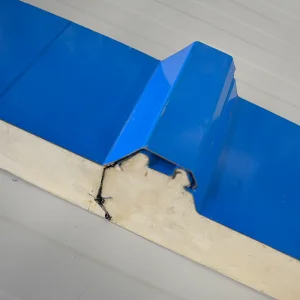
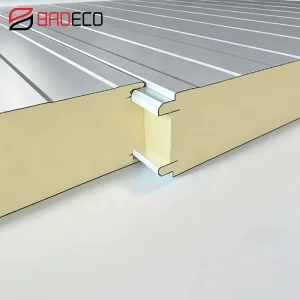
Ningbo Jonas Build Co., Ltd. addresses these severe operating environment demands by manufacturing and exporting high-performance Polyisocyanurate (PIR) and Polyurethane (PUR) sandwich panels specifically tailored for the Coimbra market. Our thermal envelope systems feature engineered air-tight tongue-and-groove joint profiles, non-hygroscopic closed-cell core foam structures (>95% closed-cell content), and food-safe antibacterial surface coatings engineered to comply with both Portuguese building regulations (Regulamento Desempenho Energético dos Edifícios de Comércio e Serviços - RECS) and strict European Union standards.
The intent mining of industrial clients in Coimbra highlights four distinct high-growth sectors demanding specialized cold room and cleanroom panel configurations:
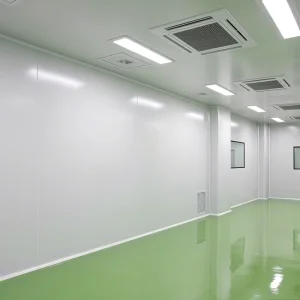
Driven by the Health Sciences Campus of the University of Coimbra and local biotech incubators. Requires zero-dust, flush-joint GMP cleanroom panels with anti-static surfaces and fire-rated cores capable of enduring ultra-low temperature environments (-80°C storage).
Supporting Dão and Bairrada viticulture, fruit distribution, and regional dairy production. Demand focuses on controlled atmosphere (CA) rooms requiring zero gas permeability and high chemical resistance against organic acids.
Distribution centers along the A1/IP3 corridors requiring massive span lengths, load-bearing ceiling panels, heavy-duty industrial sliding doors, and rapid cam-lock modular assembling capabilities.
On a global scale, the cold storage market is undergoing a structural paradigm shift driven by stringent decarbonization targets and rising energy costs. European Union directives (such as the updated F-Gas Regulation EU 2024/573) are forcing cold facility operators to transition away from high-GWP refrigerants toward natural refrigerants ($CO_2$, Ammonia, Hydrocarbons). Because natural refrigeration systems operate under higher thermodynamic pressure differentials, the structural integrity and thermal resistance of the building envelope become paramount.
Ningbo Jonas Build Co., Ltd. stays ahead of this curve by utilizing fifth-generation blowing agent technology—specifically low-GWP HFOs (Hydrofluoroolefins) and Cyclopentane systems—achieving zero Ozone Depletion Potential (ODP) and a GWP under 1. Furthermore, our continuous double-belt automated production machinery guarantees uniform foam density across the entire panel core, preventing thermal sink holes and reducing HVAC operational energy expenditure by up to 28% compared to traditional field-assembled mineral fiber or inferior EPS panel configurations.
Data-driven performance attributes engineered to assist structural designers and thermal consultants in Coimbra.
| Parameter | PIR Core (Polyisocyanurate) | PUR Core (Polyurethane) | High-Density Rock Wool | Silicon Rock Composite |
|---|---|---|---|---|
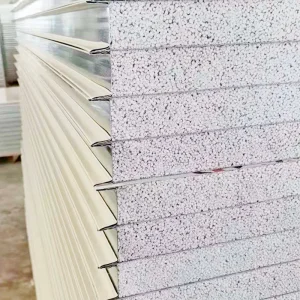
| Thermal Conductivity ($\lambda$) | 0.020 - 0.022 W/m·K | 0.022 - 0.024 W/m·K | 0.038 - 0.044 W/m·K | 0.035 - 0.039 W/m·K |
| Density Range | 40 - 45 kg/m³ | 38 - 42 kg/m³ | 100 - 140 kg/m³ | 120 - 150 kg/m³ |
| Euroclass Fire Rating (EN 13501-1) | B-s1, d0 (Fire Retardant) | B2 / B3 Class | A1 (Non-Combustible) | A2-s1, d0 (Incombustible) |
| Closed Cell Content | > 95% | > 92% | N/A (Fibrous Matrix) | > 88% |
| Operating Temp Range | -180°C to +120°C | -50°C to +100°C | -100°C to +700°C | -60°C to +300°C |
| Facing Material Options | 0.4mm - 0.8mm Hot-Dip Galvanized Color Steel (PPGI), Stainless Steel (AISI 304/316), Aluminum Foil, or Food-Grade PVC Laminate | |||
| Joint Interlocking System | Double Tongue-and-Groove with Cam-Lock mechanism and continuous internal vapor barrier seal profile | |||
In cold room construction, the joint interface between panels represents the most vulnerable point for micro-thermal bridging and humidity infiltration. Water vapor pressure driven by external ambient temperatures in Coimbra will attempt to penetrate the cold envelope. If moisture enters the core, thermal conductivity rises drastically, leading to localized icing, bacterial growth, and structural delamination.
Jonas Build panel designs incorporate an advanced labyrinthine tongue-and-groove joint geometry. For extreme freezing applications (-25°C to -40°C), our panels feature dual micro-ribbed profiles with factory-preformed soft elastomeric gaskets and heavy-duty eccentric cam-locks. When pulled together during site assembly, the internal cam-lock pulls adjacent panels to a seamless 1.5mm tolerance, forming a hermetic barrier that eliminates heat leaks and vapor transfer completely.
Proven engineering templates adapted to specialized operational conditions throughout Portugal.
Designed for vaccine preservation, biological plasma, and active pharmaceutical ingredients (APIs). Our 50mm to 100mm MgO cleanroom panels feature non-shedding, chemical-resistant surfaces compatible with hydrogen peroxide vapor (VHP) decontamination cycles.
Utilizing 120mm to 150mm PIR panels coated with food-grade 200-micron PVC film. Resists organic acids, fats, and frequent pressure-washer sanitization routines without surface corrosion or delamination.
Roof and wall systems designed for continuous portal frame structures up to 18 meters high. High tensile steel skin options withstand regional wind-load specs and thermal movements without panel warping.
Direct manufacturer expertise delivering high-volume panel orders to European ports with guaranteed quality control.
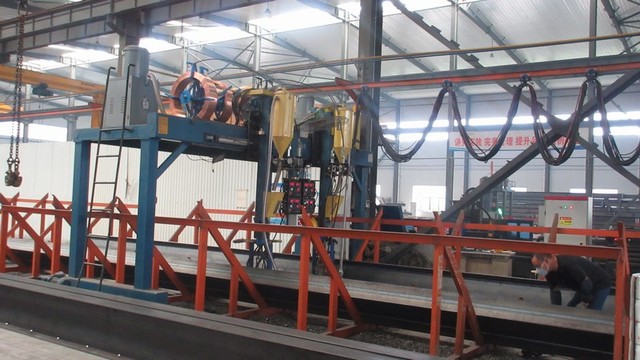
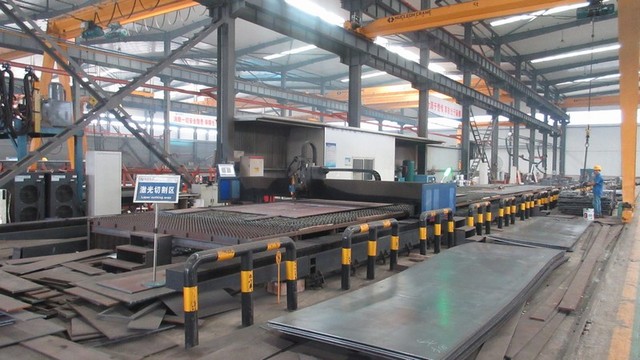
Ningbo Jonas Build Co., Ltd. stands as a premier China industrial construction panel manufacturer specializing in high-performance insulated building panel systems for international industrial and commercial projects. Operating state-of-the-art continuous polyurethane foaming lines and automated panel processing equipment, Jonas Build delivers turnkey sandwich panel solutions engineered for extreme thermal resilience and structural longevity.
Our integrated quality assurance framework spans raw material verification—sourcing high-grade coils from world-class steel producers and high-purity polyol formulations—through to real-time online ultrasonic foam density testing, bonding strength verification, and precision dimensional cutting. Every panel batch dispatched to the Port of Leixões or Port of Sines to serve the Coimbra development zone carries comprehensive CE certification, EN 14509 testing documentation, and mill test certificates (MTC).
Aligning cold storage infrastructure with EU green deal objectives and next-generation smart materials.
All panel orders exported by Ningbo Jonas Build Co., Ltd. for deployment in Coimbra and across Portugal strictly conform to the following European building codes and international specifications:
Looking toward 2030, cold room panels are evolving from static insulation envelopes into interactive thermal management systems. Jonas Build’s R&D department is currently field-testing next-generation smart panel architectures featuring:
1. Embedded IoT Micro-Sensors: Wirelessly powered sensor arrays embedded within the PIR core to measure real-time moisture migration, thermal conductivity changes, and stress degradation without breaching panel facings.
2. Phase Change Material (PCM) Hybrid Cores: Micro-encapsulated organic PCMs integrated into the inner skin layer. PCMs absorb excess thermal energy during peak electricity price hours (daytime in Portugal) and release stored cooling during off-peak night cycles, enabling facility operators to shave peak energy costs by up to 35%.
Direct technical guidance addressing intent-driven queries from developers, cold chain operators, and project managers.
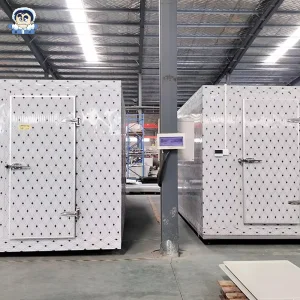
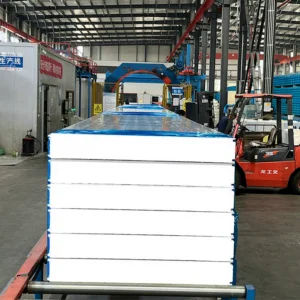
Explore our full line of insulated structural panels, cleanroom partitions, and modular walk-in refrigeration units.

 Jonas Build