Premium-grade polyurethane core elements engineered for rapid mechanical locking, optimal thermal ratings, and long-term durability in industrial environments.
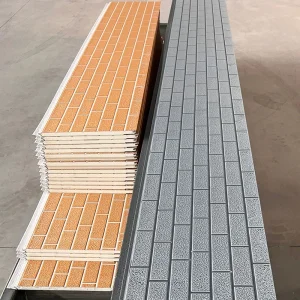
Ideal for factory partitions, structural cladding, and high-performance climate-controlled spaces.
Get Pricing Now →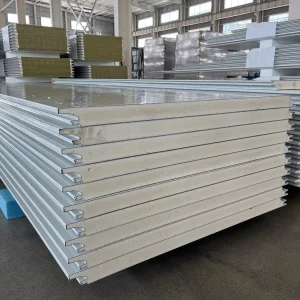
Provides unmatched structural load capacity and thermal envelope performance for sloped roofs.
Get Pricing Now →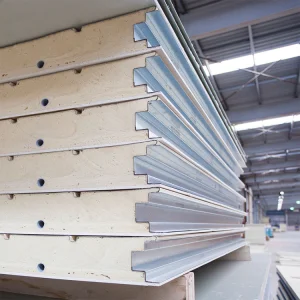
Engineered specifically for extreme weather resistance and optimized cost-to-performance ratio.
Get Pricing Now →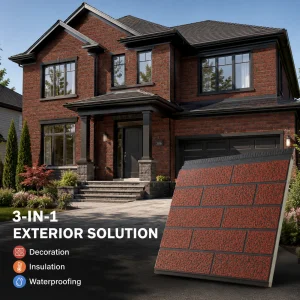
Combines contemporary aesthetics with superior insulation cores for office facades and retail plazas.
Get Pricing Now →Analyzing the strategic intersection of rapid urban industrialization, seismic risk management, and the high demand for thermal efficiency across Turkey and Europe.
Istanbul serves as the absolute geopolitical and economic bridge between the European Union, Central Asia, and the Middle East. With expansive organized industrial zones (OSB) such as Tuzla, İkitelli, and Dudullu, the region has transformed into an powerhouse for manufacturing, cold-chain logistics, and modern warehousing. The demand for energy-efficient materials has intensified due to stringent local energy performance regulations (BEP-TR) aligned with EU Green Deal initiatives. PU (Polyurethane) and PIR (Polyisocyanurate) sandwich panels are central to this transformation, offering low thermal conductivity, rapid construction times, and excellent mechanical load characteristics.
Operating in the Marmara region requires deep attention to structural safety under high seismic risks. Modern steel buildings clad with lightweight PU sandwich panels present a fraction of the mass of traditional brick or concrete structures, drastically decreasing the inertia forces acting on structures during earthquakes. Furthermore, the continuous interlocking joint systems of our panels offer elastic movement capability, preventing catastrophic structural shell failure and ensuring life-safety compliance in alignment with Turkey's updated Earthquake Code (TBDY 2018).
A comprehensive examination of thermal resistance profiles, chemical integrity, and structural mechanical dynamics of Polyurethane (PUR) and Polyisocyanurate (PIR) cores.
The choice of insulation core determines the structural envelope's long-term behavior under thermal stress and fire load. Polyurethane (PUR) is formed by reacting polyol with isocyanate at an index range typically between 100 and 110. It yields a strong, energy-saving material with a high closed-cell ratio. However, where higher fire resistance is demanded, Polyisocyanurate (PIR) technology is implemented. PIR is synthesized using excess isocyanate under a high index (typically above 250) in the presence of specific catalysts. This reaction forms strong isocyanurate ring structures. These rings require higher thermal energy to decompose compared to polyurethane links, resulting in a carbonized char layer that inhibits combustion propagation. This chemical structure achieves the superior fire performance class B-s1, d0 according to European Standard EN 13501-1.
Thermal efficiency is dictated by the thermal conductivity coefficient ($\lambda$). With an outstanding lambda value as low as 0.022 W/m·K, PU and PIR cores stand as the most efficient building envelope materials commercially available today. To put this into context, a 100mm PU sandwich panel offers the same thermal resistance (R-value) as a mineral wool panel of approximately 160mm thickness or a solid brick wall of over 1.5 meters thickness. By utilizing thinner walls for the same thermal performance, industrial warehouses in prime real estate hubs like Istanbul gain up to 6% more usable internal floor space, improving commercial yield.
Sandwich panels operate structurally as composite beams. The external metal skins (typically galvanized steel, aluminum, or stainless steel with thicknesses ranging from 0.4mm to 0.8mm) resist axial tension and compression, while the rigid PU core resists shear forces. The core density of 40–42 kg/m³ is optimized to maintain the perfect balance between mechanical shear strength and low thermal conductivity. Furthermore, the joint design (such as the double-tongue and groove interlocking system or concealed-fix configurations) prevents thermal bridging and water ingress, maintaining airtightness under high wind load and pressure changes.
Leveraging deep industrial partnerships to deliver premium quality PU panels to key development zones in Istanbul and across Turkey.
We directly supply to key developments in Dilovası OIZ, Gebze, Tuzla, and Hadımköy, offering project-based custom lengths and custom thermal configurations to fit complex build plans.
Our technical engineers design custom connection accessories, supporting structural calculations that fulfill Turkish seismic requirements for zones categorized as high seismic hazard.
Panels are manufactured utilizing zero-ozone-depletion blowing agents (cyclopentane/HFO technology), qualifying your buildings for regional environmental classifications and green certifications.
Combining world-class production infrastructure with tailored services to deliver high-performance building solutions globally.
Ningbo Jonas Build Co., Ltd. is a professional China industrial construction panel manufacturer specializing in insulated building panel solutions for global industrial and commercial construction projects. With extensive industry experience and advanced manufacturing capabilities, the company is committed to delivering high-quality, energy-efficient, and customized panel systems that meet the diverse requirements of customers worldwide.
The company provides a comprehensive range of products, including insulated sandwich panels, industrial wall panels, roofing panels, cold room panels, cleanroom panels, fire-rated panels, and customized building envelope solutions. Designed for superior thermal performance, structural reliability, and rapid installation, these products are widely used in industrial plants, warehouses, logistics centers, cold storage facilities, commercial buildings, modular construction projects, and infrastructure developments.
Ningbo Jonas Build Co., Ltd. operates modern production facilities equipped with advanced automated manufacturing lines, precision processing equipment, and strict quality inspection systems. Supported by a skilled team of engineers and technical specialists, the company offers one-stop services covering project consultation, product design, manufacturing, quality assurance, packaging, and international logistics coordination.
Innovation, quality, and sustainability are the core values driving the company's development. By utilizing advanced production technologies and premium raw materials, Jonas Build continuously enhances product performance in thermal insulation, fire resistance, weather protection, and energy efficiency. The company's panel systems help customers reduce construction time, lower operating costs, and improve overall building performance.
Committed to excellence and customer satisfaction, Ningbo Jonas Build Co., Ltd. has established long-term business relationships with clients across Asia, Europe, the Middle East, Africa, and the Americas. The company remains dedicated to providing reliable insulated building panel solutions that support sustainable construction and create long-term value for customers worldwide.
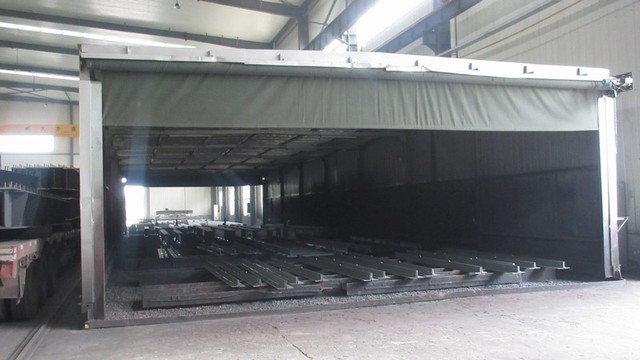
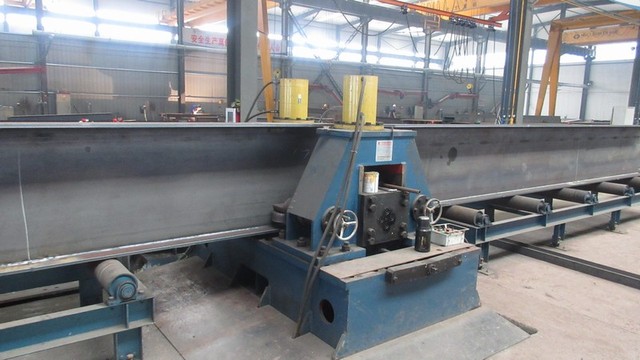
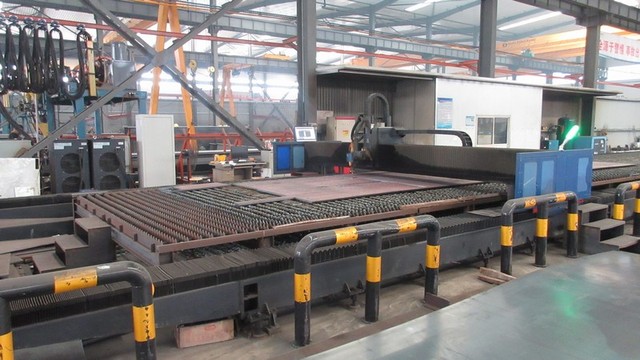
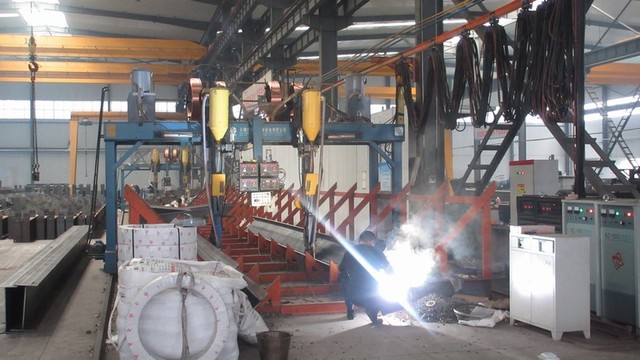
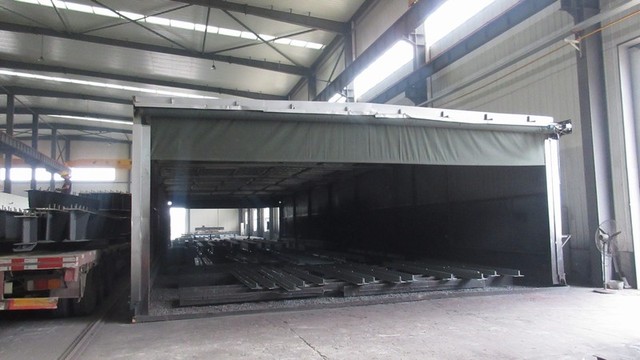
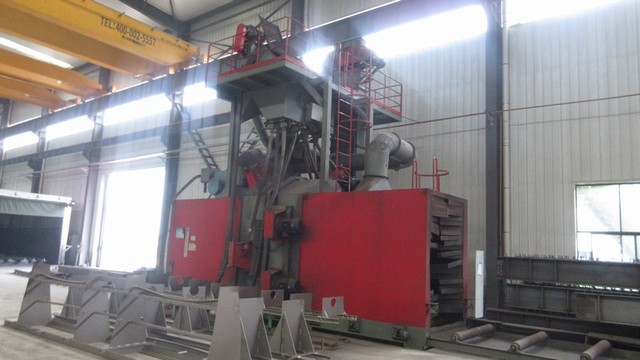
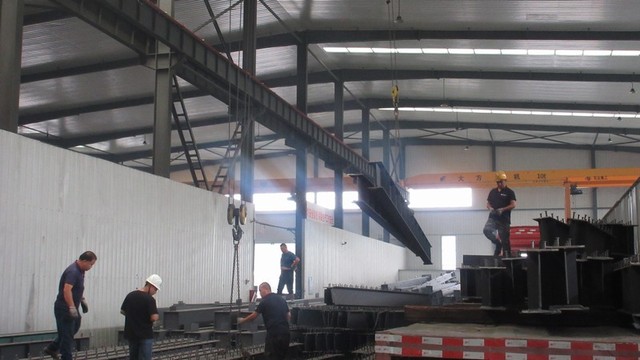
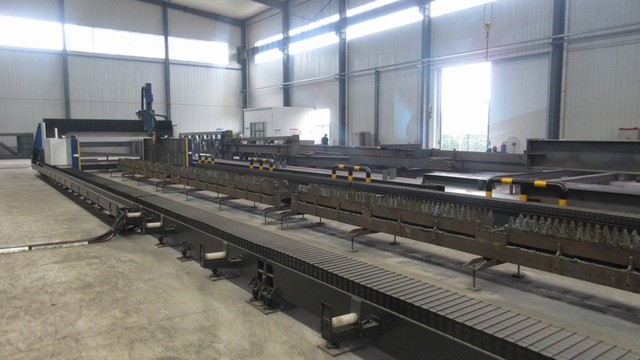
Take a virtual walkthrough of our high-precision continuous production facility, featuring advanced European laminating technology.
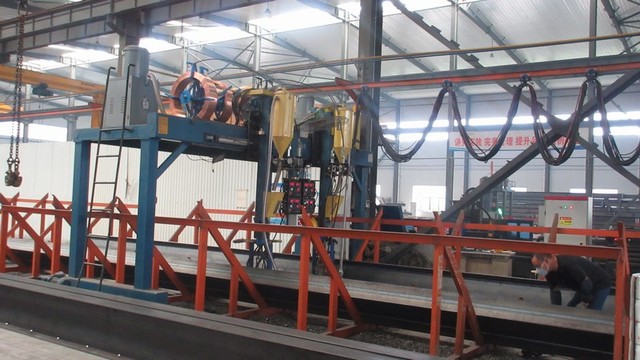
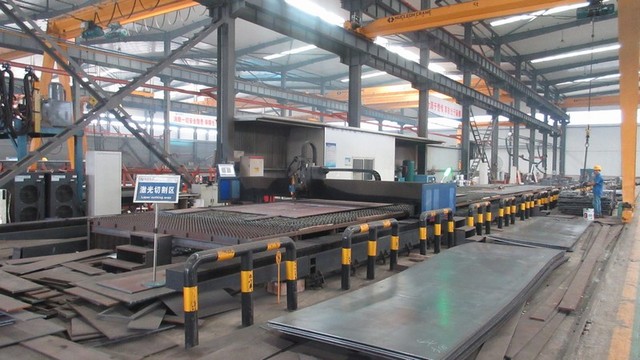
Developing next-generation ecological insulation platforms for sustainable high-efficiency smart buildings.
We are transitioning core chemistry toward ultra-dense, micro-cellular arrays designed to reduce thermal conductivity values down to 0.019 W/m·K, meeting future European Net-Zero mandates.
Targeting circular economy requirements, our R&D incorporates up to 30% recycled plastics and plant-derived polyols into the foam formulation, lowering the carbon footprint of structural panels.
Working alongside top sensor providers to embed temperature, moisture, and stress sensors directly into the panel joints, allowing real-time monitoring of building envelopes.
Explore our complete catalog of industrial polyurethane panel systems designed for wall claddings, roof installations, cold room containment, and soundproofing systems.
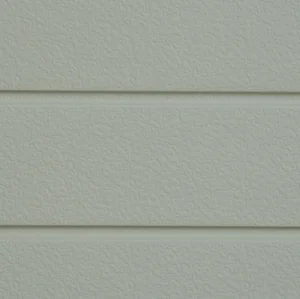
Excellent weather tightness and mechanical stability for structural outer walls.
Get Pricing Now →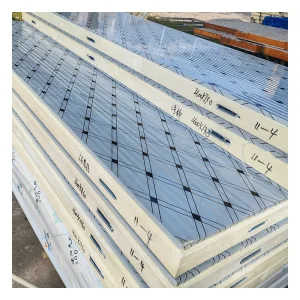
Offered in thicknesses up to 200mm to achieve excellent sub-zero climate isolation.
Get Pricing Now →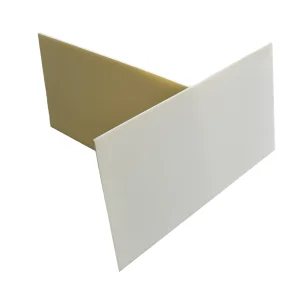
Designed to carry solar panel load while minimizing roof heat transmission.
Get Pricing Now →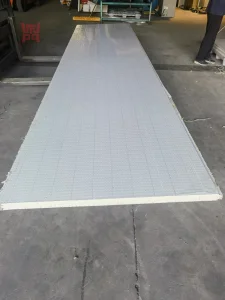
Provides cost-efficient energy management for housing assemblies.
Get Pricing Now →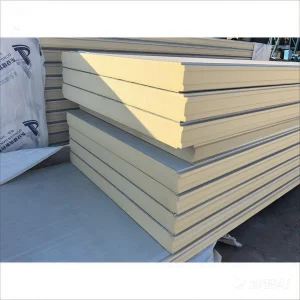
Specifically designed to prevent biological accumulation in hygienic operations.
Get Pricing Now →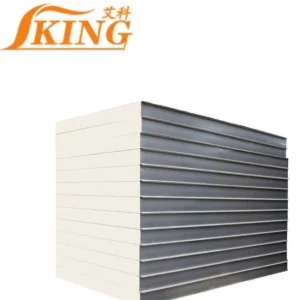
Robust wall profile offering extreme resistance against mechanical impact.
Get Pricing Now →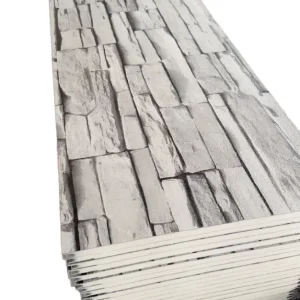
Excellent resistance to humidity, saline air, and perimeter wind pressures.
Get Pricing Now →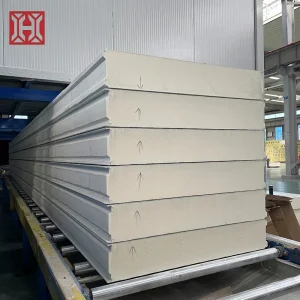
Highly optimized for fast delivery and quick replacement during emergency site maintenance.
Get Pricing Now →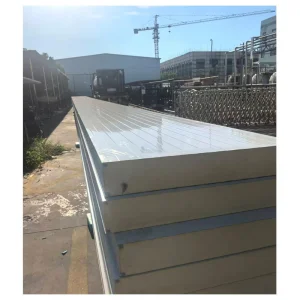
Lightweight panels designed for partitioning in medium-rise office structures.
Get Pricing Now →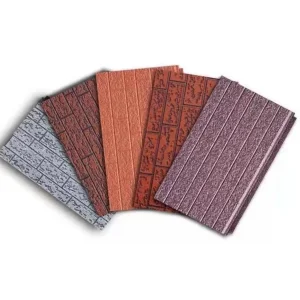
Provides a clean design appeal for modern suburban residential envelopes.
Get Pricing Now →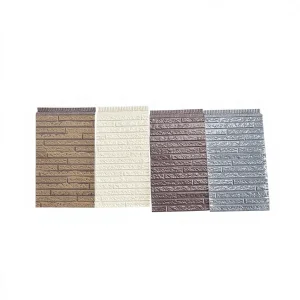
Engineered for high-rise commercial structures requiring strong insulation cores.
Get Pricing Now →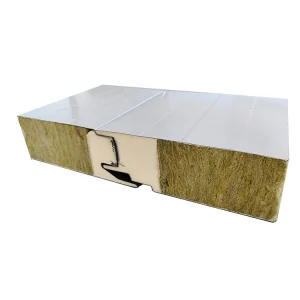
Acoustically optimized panel configurations designed to absorb high-frequency road noise.
Get Pricing Now →Answering common engineering, architectural, and supply-chain questions regarding PU/PIR panel implementation in industrial builds.
PUR (Polyurethane) and PIR (Polyisocyanurate) both offer similar thermal insulation, but they differ in chemical structure and fire resistance. PIR is formulated with a higher ratio of isocyanate under high curing temperatures, forming stable isocyanurate ring structures. When exposed to heat, PIR develops a protective carbonized char layer, preventing fire spread and reducing smoke toxicity. While PUR achieves B2/C-class ratings, PIR panels meet the EN 13501-1 fire standard rating of B-s1, d0, making PIR panels suitable for high-risk industrial plants and cold-storage warehouses.
Cold storage units require tight heat protection to minimize cooling run-times. Because polyurethane panels feature a closed-cell ratio exceeding 95% and have a very low thermal conductivity ($\lambda = 0.022 \text{ W/m·K}$), they eliminate thermal bridges. For deep-freeze applications (-20°C to -40°C), panels with thicknesses ranging from 150mm to 200mm are used to prevent thermal transfer, condensation, and ice formation, ensuring low operating costs.
Seismic events demand structural systems that are both light and ductile. Our panels feature high shear strength and are coupled with heavy-duty metal connection brackets. These steel sheets are lightweight, reducing the building's overall mass. This design decreases inertial forces during earthquakes and distributes stresses across the steel frame, preventing structural failure.
For coastal and high-humidity applications like the Ambarlı Port area in Istanbul, standard polyester paint may not be sufficient. We offer specialized protective topcoat finishes, including PVDF (Polyvinylidene Fluoride) coatings and thick PVC Plastisol laminations. These coatings protect galvanized steel sheets against salt fog, aggressive UV degradation, and chemical wear, extending the building life to over 25 years.
Collaborate with the technical team at Ningbo Jonas Build Co., Ltd. for structural load calculations, thermal performance estimates, and project quotes tailored for your construction site in Turkey.
Send Inquiry Now Jonas Build