Jonas Build
1 / 5
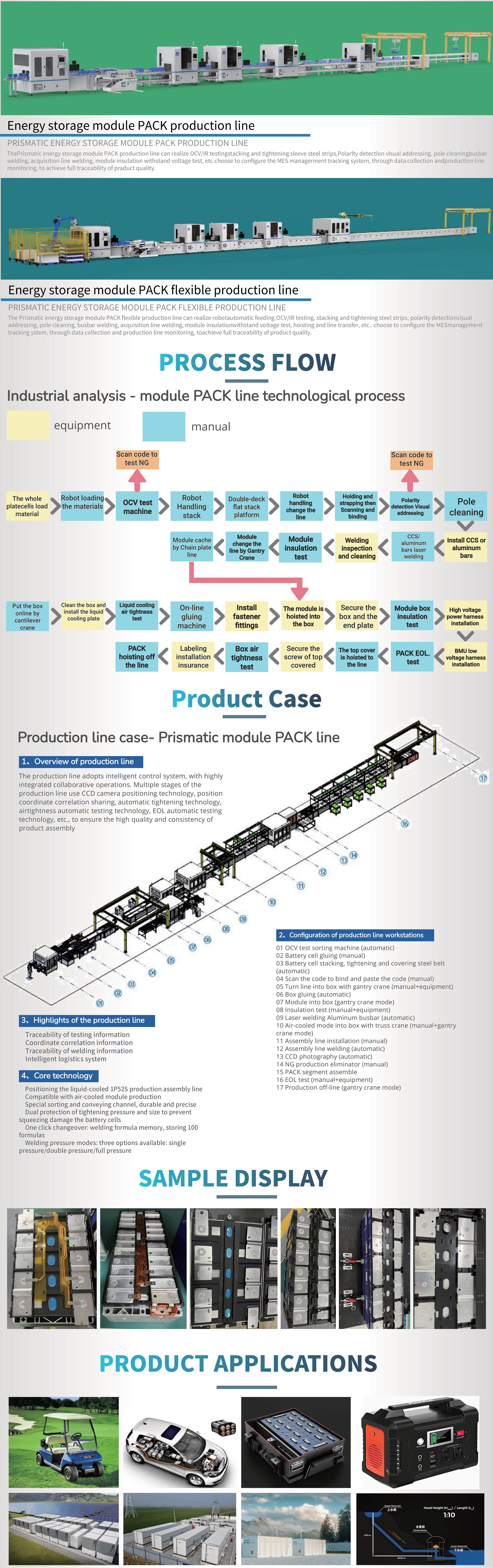
| Equipment Name | Mode | Function Segmentation | Common Mode |
|---|---|---|---|
| Laser Welding | Four-axis Automatic / Six-axis Robot |
Module Code Scanning | Automatic Trigger & Code Scanning |
| MARK Test | CCD Automatically | ||
| Distance Measurement | Rangefinder Automatically | ||
| Weld Pressing Method | Single Pressure Single Welding | ||
| Data Collection | Unnecessary | ||
| Post-welding Inspection | Manual Visual Inspection / CCD Automatic |
Welding inspection | Manual Visual Inspection + Wooden tool |
| CCD Inspect Performance | |||
| Dielectric Voltage Withstand Test | Manual Visual Inspection / Equipment Automatic |
Testing Method | Connect The Total Positive, Negative And End Side Panels |
| Device Testing | Pneumatic Mode Automatically Switching On | ||
| Data Collection | Unnecessary | ||
| Module Part Double-speed Chain | 2.5x speed / 3.0x speed | Load Requirement | 100KG |
| Carrier Material | Aluminum Sheet + Anti-static Rubber | ||
| Material Vehicle | Aluminum Material | ||
| The lamp rack for workers | Electrical Matching | ||
| PACK Part Double-speed Chain | 2.5x speed / 3.0x speed | Load Requirement | 200KG |
| Carrier Material | Aluminum Sheet + Anti-static Rubber | ||
| Material Vehicle | Aluminum Material | ||
| The lamp rack for workers | Electrical Matching | ||
| EOL Testing | Manual Test / Equipment Automatic |
Testing Method | Switch On the Total Positive And The Total Negative |
| Device Testing | Pneumatic Mode Automatically Switching On | ||
| Data Collection | Unnecessary |

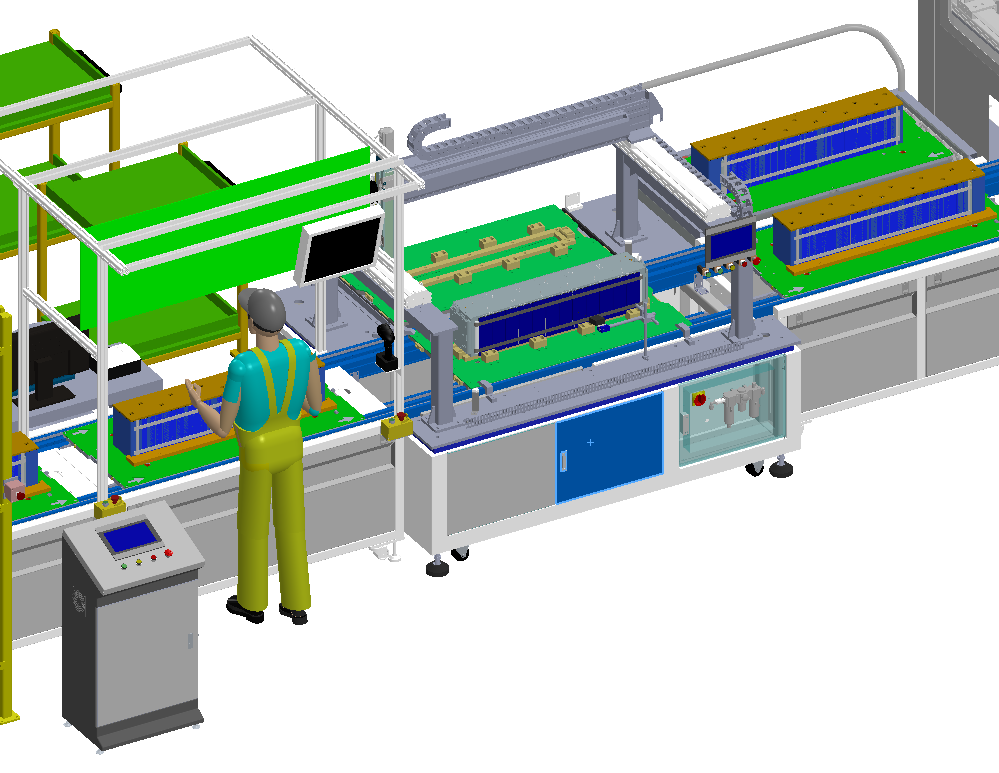
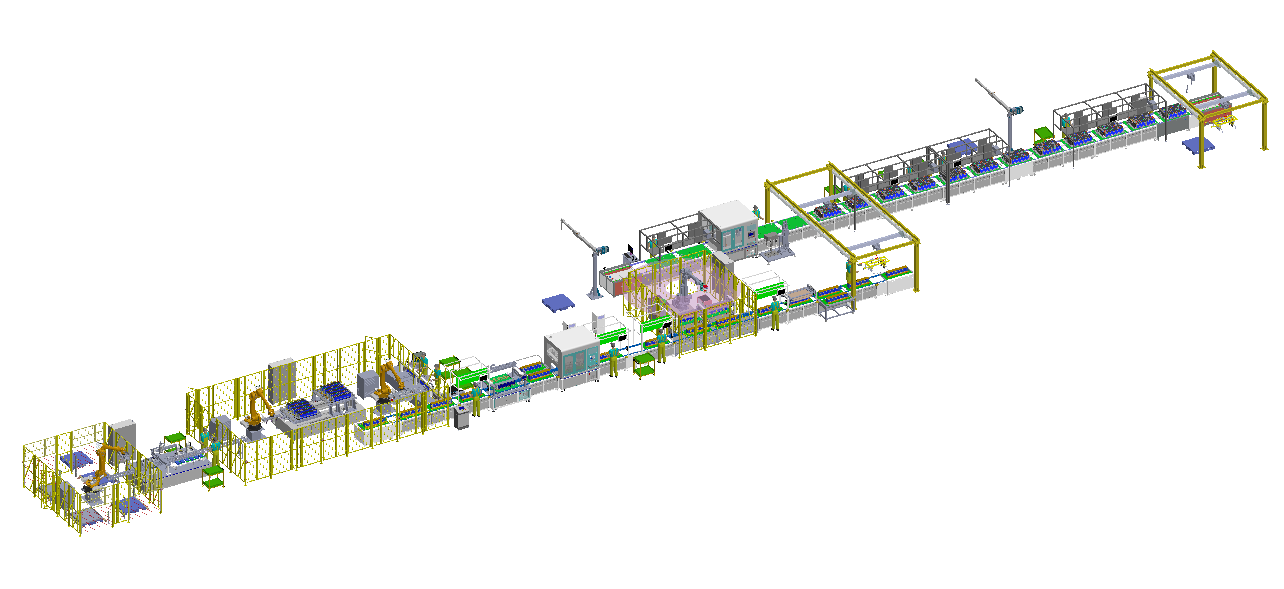
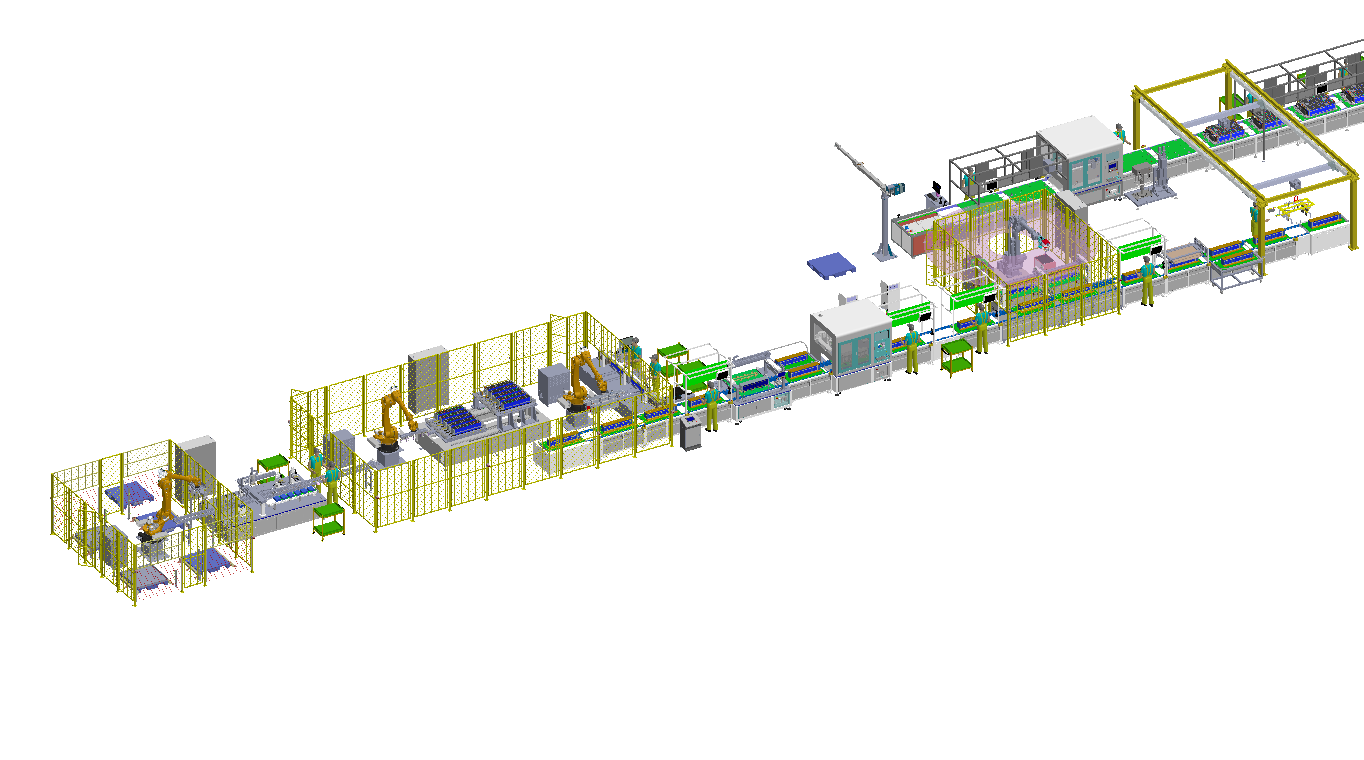
The system supports both Four-axis Automatic welding and Six-axis Robot welding modes, incorporating automatic module code scanning, CCD-driven MARK testing, and automated rangefinder distance measurements.
Post-welding inspection can be performed via manual visual inspection assisted by structural tools, or automated using a high-precision CCD system to ensure reliable weld joint quality.
The primary difference lies in the load requirements. The Module Part double-speed chain supports loads up to 100KG, while the PACK Part double-speed chain is engineered to support up to 200KG. Both systems operate at 2.5x to 3.0x speeds and feature aluminum sheet carriers with anti-static rubber.
This test links the total positive, negative, and end side panels. Testing can be set to Manual Visual Inspection or Equipment Automatic mode, utilizing pneumatic controls to switch the device on automatically.
In the standard configuration detailed in this equipment checklist, active data collection is marked as unnecessary, keeping the setup streamlined and optimized for rapid cycle times.