Jonas Build
The Czech Republic Industrial Evolution
The Czech Republic, acting as a crucial industrial and logistics backbone of Central Europe, continues to experience significant real estate expansion. Key regions such as Central Bohemia, South Moravia (Brno hub), and the Moravian-Silesian region (Ostrava industrial zones) are witnessing major investments in modern automotive manufacturing, electronic assembly plants, third-party logistics (3PL) hubs, and cold storage facilities.
Due to the integration of local building regulations with European standards, the demand for high-performance structural insulated panels with precise fire ratings has escalated. For developers constructing advanced factory lines or pharma cleanrooms, building materials must not only guarantee low thermal conductivity but also strictly adhere to fire barrier specifications to safeguard high-value industrial machinery, raw chemicals, and workforce operations.
"Czech national safety standards (specifically under CSN EN 13501-1 and related regional guidelines) require strict certification protocols for external building envelopes and internal spatial dividers regarding fire performance, smoke development, and flaming droplets."
Crucial Fire Compliance: EN 13501-1 Classification System
When exporting structural composite panels to the Czech Republic, technical compliance is paramount. Fire classification codes establish how sandwich boards and acoustic paneling respond to fire. The critical metrics include:
- Reaction to Fire Class: A1 (non-combustible, like premium rockwool) and A2 / B classes (very limited contribution to fire, standard for advanced high-density PIR composite cores).
- Smoke Production Level: Clamped tightly between s1 (little to no smoke emission) and s3 (substantial smoke release). For enclosed spaces, hospital environments, and lab units, s1 is frequently mandated.
- Flaming Droplets/Particles: Rated from d0 (no burning droplets) to d2 (substantial drops). A d0 designation is essential to maintain evacuation pathways during structural fires.
Comparison of Core Materials for Modern Czech Construction
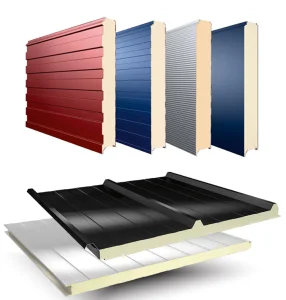
We supply a diverse array of insulation cores designed to meet the distinct engineering demands of your Czech projects. The table below outlines the core properties:
| Core Material | Thermal Conductivity (λ) | Fire Resistance Class | Primary Applications |
|---|---|---|---|
| Rockwool (Mineral Wool) | 0.038 - 0.044 W/m·K | A1 Class (EI 60 - EI 240) | Heavy industry factories, chemical warehouses, high-risk dividers. |
| Polyurethane (PIR/PUR) | 0.020 - 0.024 W/m·K | B-s1, d0 / B-s2, d0 | Logistics cold storage, refrigerated warehousing, external structural envelope. |
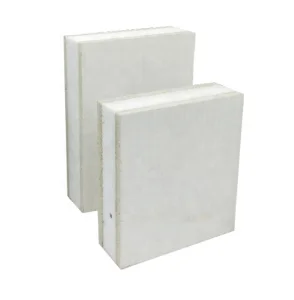
| MGO / Cement Sandwich | 0.12 - 0.18 W/m·K | A1 Non-combustible | Modular partition walls, hospital interior drywall replacements, labs. |
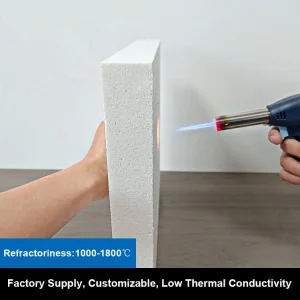
| Ceramic Fiber Board | 0.06 - 0.09 W/m·K | Non-combustible (up to 1260°C) | Industrial furnace linings, thermal processing plants, machinery enclosures. |